Through this summer most of my travels have either been onboard Irene, or around the areas where the ship has been based. After completing the TGO Challenge, and taking part in an interview for a winter job, I returned to Oban to rejoin the ship. After a quick turn around, we picked up Kag, our kayaking guide, and a bunch of boats, and headed out to explore the islands of the Inner Hebrides.
Looking back at Oban from the middle of the Sound of Kerrera
Our first stop was the sheltered water of Loch Spelve, on the eastern side of Mull, to wait out high winds and feast on mussels from the local farm and foraged seaweed. As I was pottering about in the tender I had a phone call. I was successful at the interview. I got the job! Or more accurately, I was going to be part of the team to do the job. More about that below.
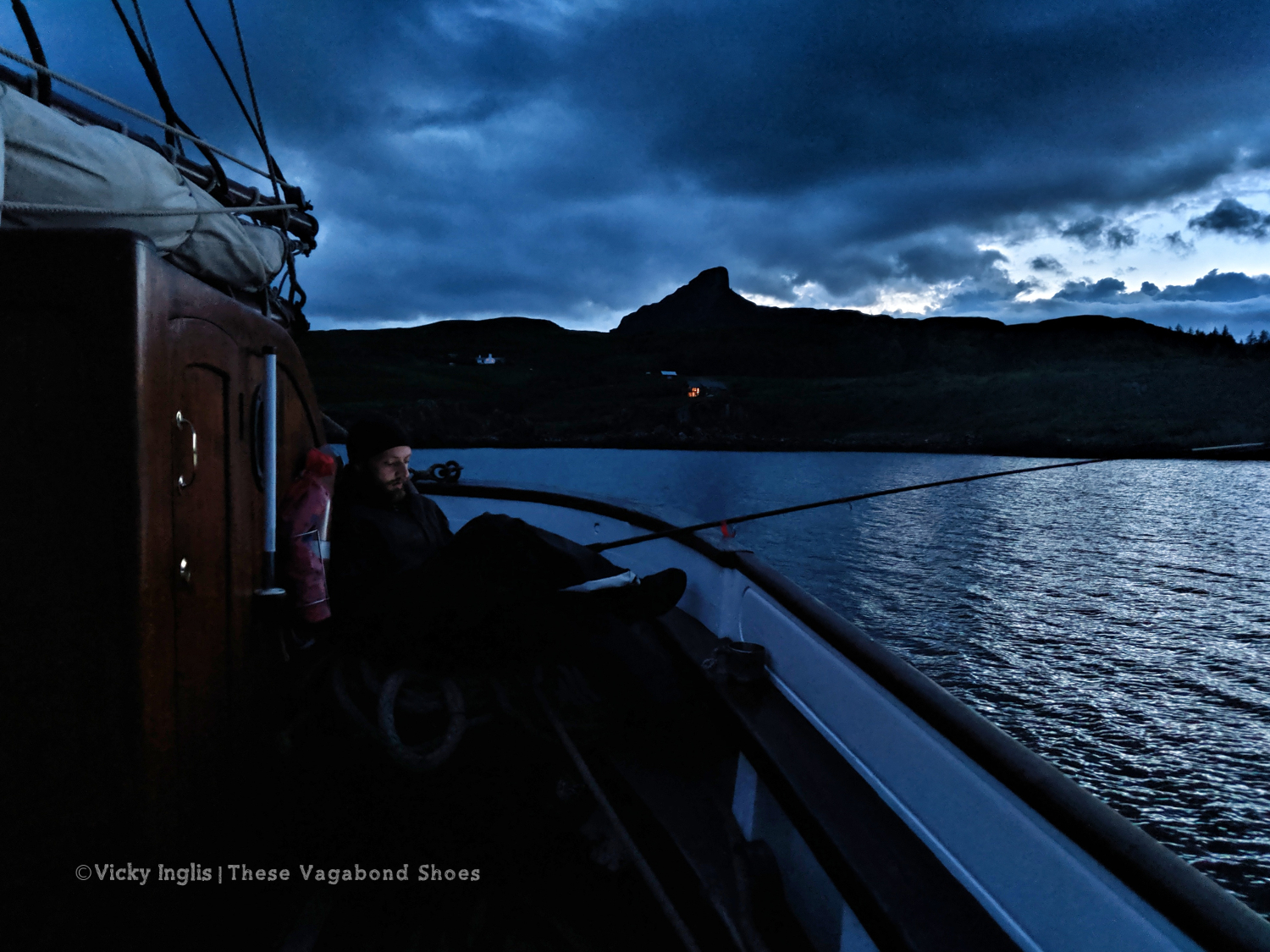
Deckhand Dan, possibly the least successful fisherman on Irene.
Once storms abated, we headed through the Sound of Mull and round Ardnamurchan Point to the Small Isles, spotting a couple of minke whales on the way. We dropped anchor off Eigg, under the imposing An Sgurr, for a couple of nights, and I was fortunate to join the group for a paddle along the east side of the island accompanied by singing seals and diving gannets. Kag also introduced us to the concept of sea diamonds, which made kayaking in a total downpour seem damply magical.
Back in Oban, we had time for a quick crew turn around and a couple of great nights out, before heading out. This time we turned southwards, heading for Jura, and the sheltered water of Loch Tarbert, and Islay, dropping the kayakers in near Ardbeg for a paddle round to Port Ellen, with as many whisky stops as they could manage. On the return leg, we called in by the islands of Oronsay and Colonsay, anchoring in beautiful Kiloran Bay for a barbecue on the beach.
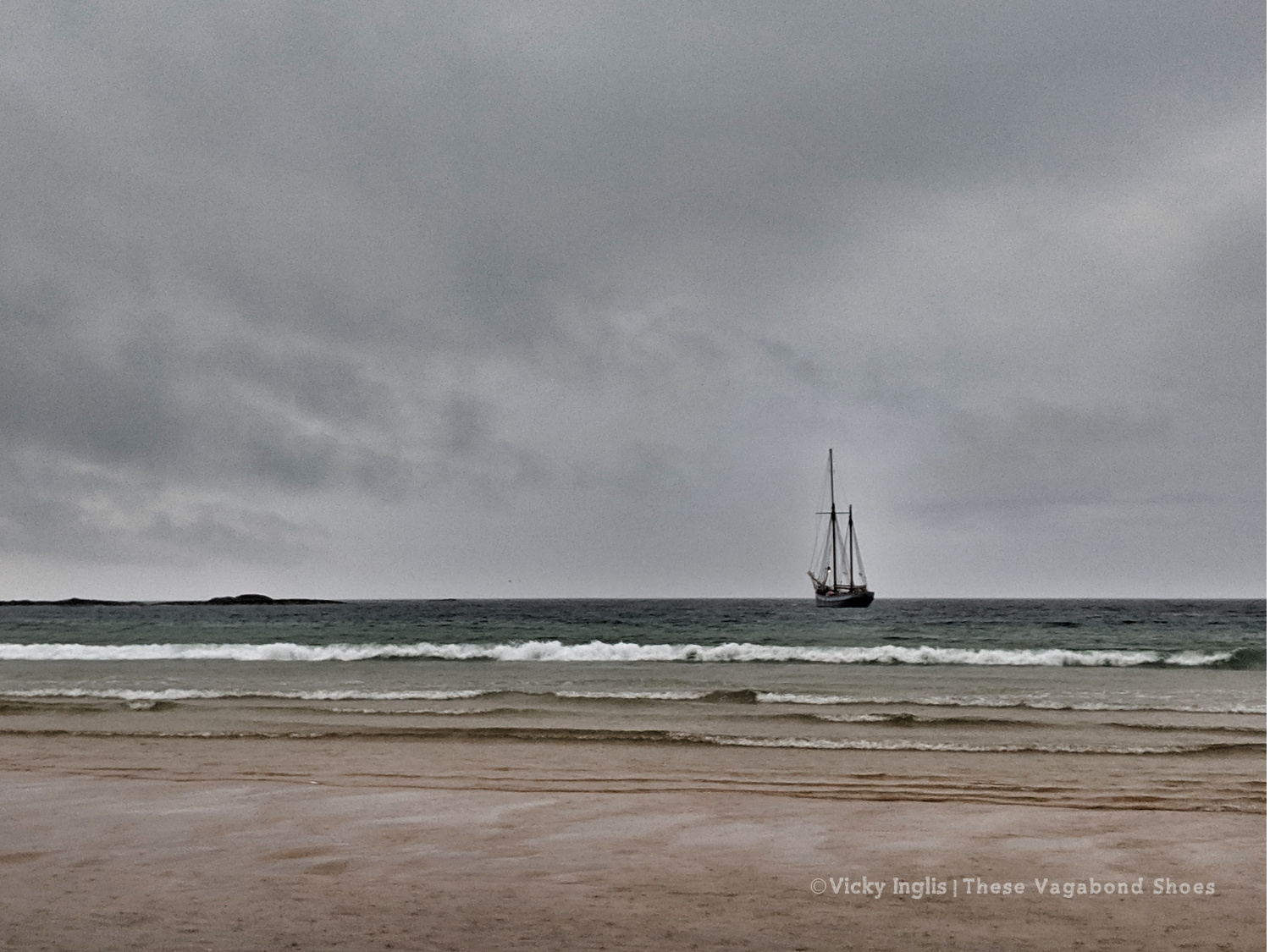
Irene at anchor in Kiloran Bay, Colonsay. An extremely damp beach recce, but the weather dried up overnight for a beautiful stay.
There’s few things more welcome than a hearty meal after a long day of walking, or a morning coffee before you hit the trail. I really enjoy cooking outdoors. I gained my Advanced Camper and Outdoor Cook badges as a Guide, preparing meals over an open fire, and have an excellent repertoire as a BBQ cook. Food just tastes better with a side serving of the great outdoors.
While sitting by a roaring campfire with a steaming mug of cocoa has a certain romanticism, it’s never the practical option for cooking and very rarely a responsible choice, especially in remote areas. Even when staying on a campsite, a lightweight backpacking stove is far more safe and efficient, especially when you’re on the move again every day.
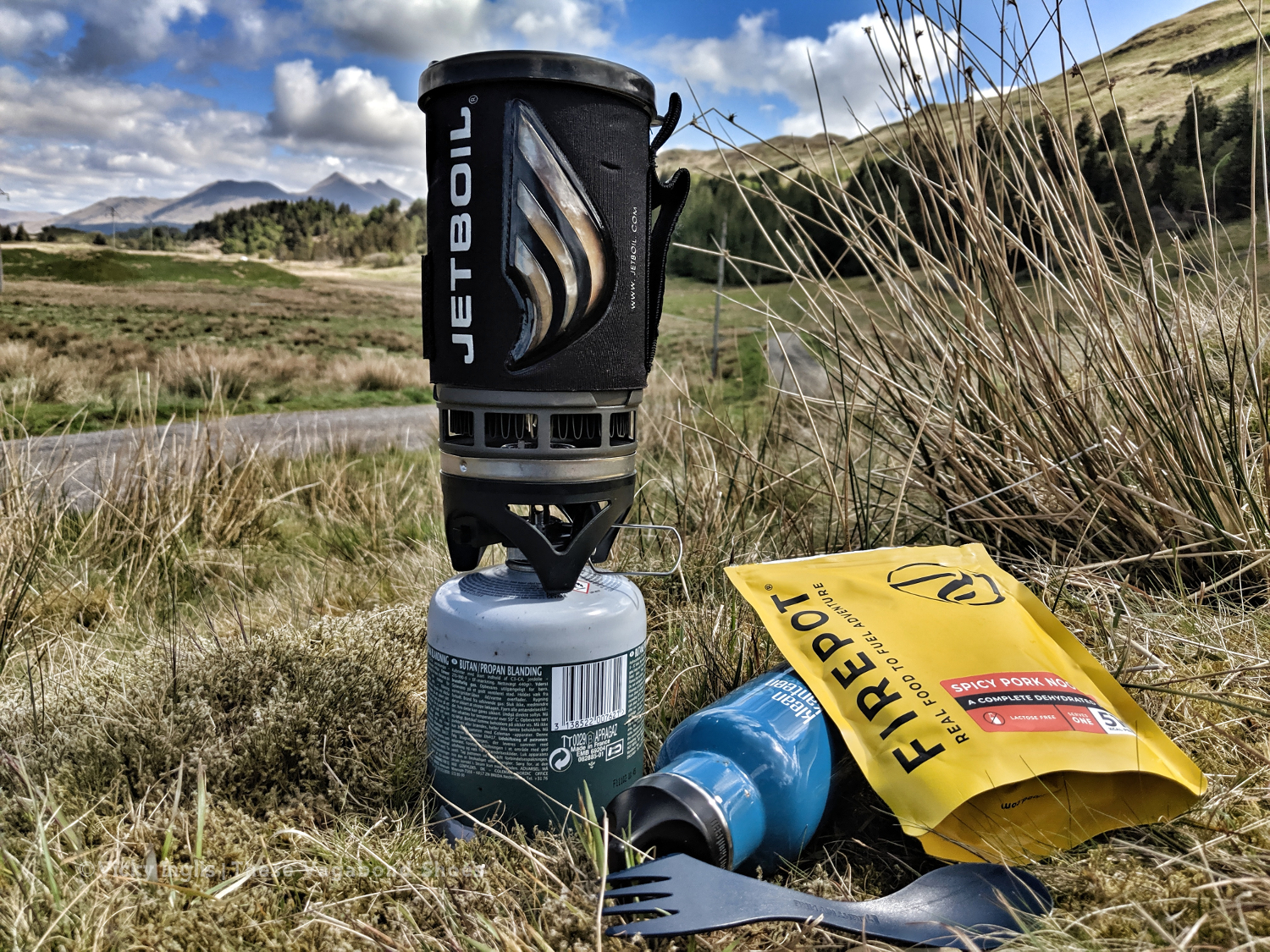
What am I looking for in a cooking system for backpacking? Something simple to use, that will get the job done quickly at the end of a long day, especially when the weather is rubbish. It should be lightweight and dependable, easy to pack away after use and clean at the end of a trip.
Plastic. It seems that’s all we’re talking about right now, thanks to eye-opening documentaries like A Plastic Ocean and Blue Planet II. Specifically plastic pollution in the world’s oceans. Single-use plastics. Things that become waste products within minutes, sometimes even seconds after we lay our hands on them.
Plastic isn’t inherently bad. It’s cheap, lightweight, hygienic, versatile, and virtually indestructible. But as a society we’ve become overly dependent on it, manufacturing more than 300 million tonnes a year, and generating far more waste than the planet can handle. Not enough is recycled, landfill is filling up, and invariably some plastic waste ends up in rivers and seas. And it’s virtually indestructible.
We have become addicted to plastic. We have transformed the nature of the ocean. Without the ocean, life on Earth could not exist – including us.
Dr. Sylvia Earle
According to recent research, there is now no corner of the earth which is completely free from plastic contamination, from the polar seas to the deep ocean. And the problem is multi-stranded: large, free-floating items pose a risk of entanglement or choking; medium to small items are ingested, filling stomachs without providing nutrition; and tiny fragments of degraded plastic floating in surface water accumulate toxins, poisoning through the food chain. Marine ecosystems face catastrophic damage.
Whilst various governments, NGOs and businesses have recognised the scale of the problem and made commitments to future change, how long til the effects percolate down into our everyday life? I think it falls to us to take our own steps, and force change from bottom up.
Surely we have a responsibility to care for our blue planet. The future of humanity – and indeed all life on Earth – now depends on us.
Sir David Attenborough
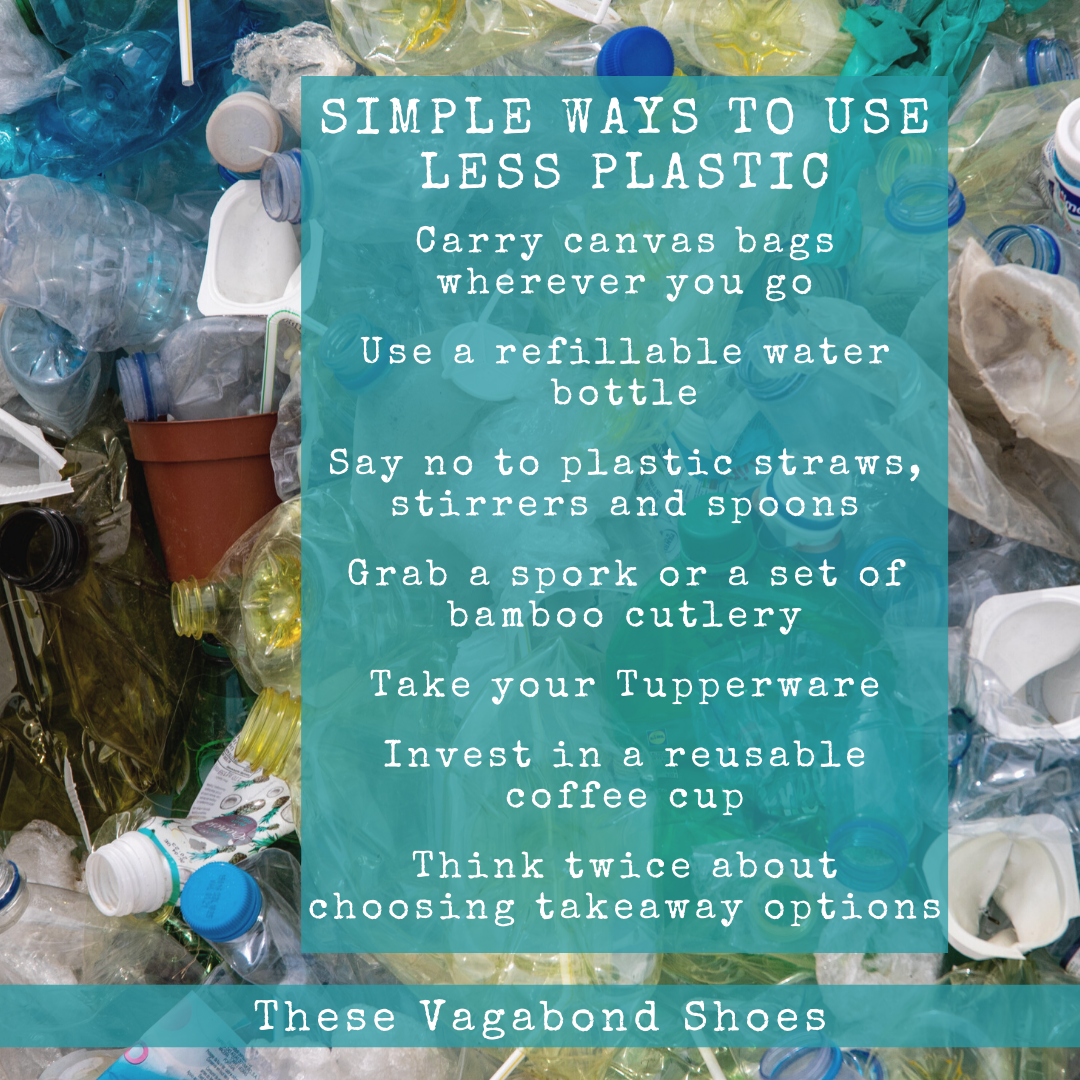
There are several ways we can reduce our reliance on plastics, especially single-use items, take responsibility for what we consume, and use plastics only when there’s no better alternative. And the good news is that many of these measures are simple and can be incorporated into our everyday lives, at home and on the road.
These are just a few of the tips I’ve picked up from my work in conservation and on my travels, and some of the bits and pieces I’ve invested in to help make it easier to avoid unnecessary single-use plastics. I hope it gives a few practical and affordable solutions you can use on your travels, and at home too.
Carry Canvas Bags
The nations of the UK, along with many other countries in Europe, introduced small levy charges on single-use plastic carrier bags as a prompt to encourage people to think about their reliance on them. A success, the amount of bags distributed has been cut by up to 90% in some countries, and the proportion of plastic waste made up from bags found in marine surveys has dropped significantly.
Other countries, particularly across Africa and South Asia, have gone further and outlawed the use of plastic bags completely. I always have a canvas bag or two in my handbag or daypack while I’m on the move, and I store others in my car and office desk drawer so I always have one handy for shopping. You can pick up canvas bags almost everywhere, and sometimes promotional bags are available for free.
Bring your own bottle
I always carry a refillable water bottle with me, a habit from many years of working outdoors and in remote areas. Using a refillable bottle also has the added benefit of saving you money in the long term. Bottled water is an unnecessary expense in most locations, and more and more places are now providing water fountains or free refills to help tackle plastic use. Just be sure to empty your bottle before going through airport security.
Until recently most of us rarely gave straws a second thought. Then we all saw thatfootage of the turtle, and realised these small, single-use items sum-up our throw-away relationship with plastic. Cheap and convenient, but rarely essential, most of us can easily do without them.
However straws help some drink independently, make it easy for small children to avoid spills, and make cocktails feel, well, fancy. So if you can’t do without, pick up a pack of paper straws instead, or invest in a reusable bamboo or metal alternative (which usually come with their own cleaning kit), and channel that old fella drinking maté you saw in Buenos Aires.
Take a reusable cup to the coffee shop
Takeaway drink cups are usually lined with polyethylene to stop leaks, and in the UK alone more than 7 million of these “disposable” cups are given out every day. This adds up to an astonishing 2.5 billion a year, and due to the mixed materials in their composition only around 1% are ever recycled. The remainder will end up as litter or in landfill.
Many cafés and coffeehouses, both chains and independent stores, offer a discount for customers bringing their own cups. I keep my reusable cup, by ecoffee, in my car for an occasional takeaway drink, others are available including collapsible cups to pack for travelling.
Takeaway coffee is not that common in many countries. In the Scandinavian countries, the world’s largest coffee consumers, most people will sit down in a café, with or without friends, and savour their brew in a glass or ceramic cup. Even Italians stop for espresso in a dainty demitasse at the bar rather than grab something to go.
So next time you fancy a coffee, think about taking the time to sit in and savour your drink. It’s one of the nicest and most affordable experiences when you travel, and cuts the need for single-use drinks cups at the source whether you’re home or away.
Take your own eating tools
A spork is a simple, small thing that you can stick in a daypack or handbag to cut out the need for single-use plastic cutlery with your takeaway lunch, street food snack, or budget hotel breakfast. It’s an essential for hiking and camping trips too.
If I’m travelling anywhere for more than a few days, I might also stick a lunchbox, a clip-top tupperware tub, into my bags. It lets me prepare my own lunches, and save leftovers, and cuts down on the amount of waste I create from buying pre-packaged salads, sandwiches, and pasta. To minimise the space it takes up in my bag, I stuff my toiletries inside, reducing the likelihood of liquids leaking into my clothes too.
In winter, I have a food flask I use to take hot meals or soup with me while I’m off exploring the outdoors.
I realise there’s likely to be times where I don’t always follow my own advice, but I hope that I’ve made you question your reliance on plastics, and given you some suggestions that can be easily incorporated into your routine. They’re just small steps, but if more of us make them, and keep raising awareness of the issue, we become part of the solution rather than contributing to the problem.
How do you cut out single-use plastics on your travels? Share your tips in the comments below.
Inspired by what you’ve read? Why not pin this post?
This post contains affiliate links. If you purchase through my link, I will make a small commission* at no additional cost to you. These help me to continue to run this site, providing tips and advice, and sharing stories from my adventures. Thank you for supporting me.
*Maybe enough for a coffee. Not enough for a yacht.
This list includes everything I take on my day hikes in the UK (in summer conditions), plus a few extras for when I’m in different situations and have different purposes for my hikes. It’s taken me a while to get my kit together, but it’s been worth getting a few items to ensure I’m safe and warm, and can do everything I want to do.
The biggest element of planning a hike in the UK is our predictably unpredictable weather. Just because a day starts in sunshine, there’s no guarantee that it will end that way, and if you’re hiking hills, mountains, or munros on a drizzly day, there’s every chance you might emerge through the cloud layer into the dazzling sun on the tops.
I’ll often go hiking solo, so I’m solely responsible for taking everything I might need. I also lead small groups and hike with friends, but still take the same amount of kit. I want to be responsible for my own welfare, and able to help out anyone else that might be having an issue. I might also bring a few extra items if there’s more than just me, in the hope that others will share their sweets in return.
My guide to using trekking poles on your hikes, and some expert tips for finding the right pair for you.
I’ve used trekking poles for long hikes for years, and will wax lyrical about them whenever I’m asked. And often even if I’m not. During training walks for a Three Peaks challenge back in 2007 I found that going downhill was aggravating an old knee injury. After asking around for advice and reading a few articles, I borrowed a set of poles to try them out on steep descents and found they helped my knee and helped to keep off fatigue. So I bought myself a pair with some birthday money.
And then I started using them for trail running, especially for ultra distances, and for multi-day backpacking trips, to help with balance under a heavy pack* and take some of the strain off my back. I’ve even been considering using them to pitch a tarp for an overnight bivvy.
My kit for a multi-day backpacking trip.
*Lightweight backpacking? Hahaha. Not me. With half a kilo of peanut butter, a pair of binoculars and an actual HARDBACK book about birds, and my collection of shiny pebbles gathered on the way, I’m a lost cause to the lightweight movement.
A list of little things to help boost my mood and manage seasonal blues.
At this time of year, with the winter solstice just past, and New Year not too far ahead, I usually find myself in a reflective mood, thinking about all the things that have happened through the year, and what might be to come in the year ahead.
Getting outside in winter has huge benefits for physical and mental health, but can be a real challenge.
I find this time of year quite challenging; living with depression sometimes I’m so lacking in energy and motivation through these months that just getting out of bed feels like swimming through treacle. I’m no fan of the resolutions that January brings, usually involving the denial of alcohol, caffeine and sugar; things that make the dark winter months that bit more enjoyable.
In my opinion, such extreme measures and deprivation are unlikely to do any favours in the long term. I think a more workable way to make lifestyle changes, and to manage the challenges of winter, is to introduce small, enjoyable, things that upgrade my every day, and contribute to success without excluding anything.
A few items to keep you comfortable on outdoor adventures with the changing season.
As a wildlife ranger I’d spend the vast majority of my working time outside, all year-round, whatever the weather. As autumn heads into winter, there are a few additional things I rely on to make it easier to get out and do my job, and to make the most of adventures on beautifully crisp winter days.
Tips on how to pack for a once-in-a-lifetime sailing voyage on a traditional sailing ship.
You’ve booked a once-in-a-lifetime voyage on a beautiful sailing ship, and started dreaming about life during the golden age of sail or even rounding the Horn in a force nine. But as your date of departure cruises closer, what do you actually need to pack?
I’ve sailed on a few tall ships; short voyages around western Europe, island hopping in the Pacific, on long ocean crossing passages, and in the Tall Ships races, so from my experience, here are some recommendations to add to your packing list.
Crossing the Arctic Circle under sail along the coast of Norway
My guide for keeping your hiking boots at their very best.
As a ranger, I practically live in outdoor gear, and everything I own gets pretty heavily used and abused through my usual working day. Like my hiking boots, which I wear most days (if it’s not hiking boots, I must be in either wellies or sandals. Roll on summertime!). But I do like to get the best out of my stuff, so that means I also take a bit of time to care for and maintain my gear to make sure it lasts well and keeps performing at the standard I expect it to.
Muddy conditions underfoot on a regularly patrolled route on the Isle of Wight.
These are my top tips for caring for you hiking boots, ensuring that they don’t end up stinky and awful, and keeping you with happy feet when you head out hiking:




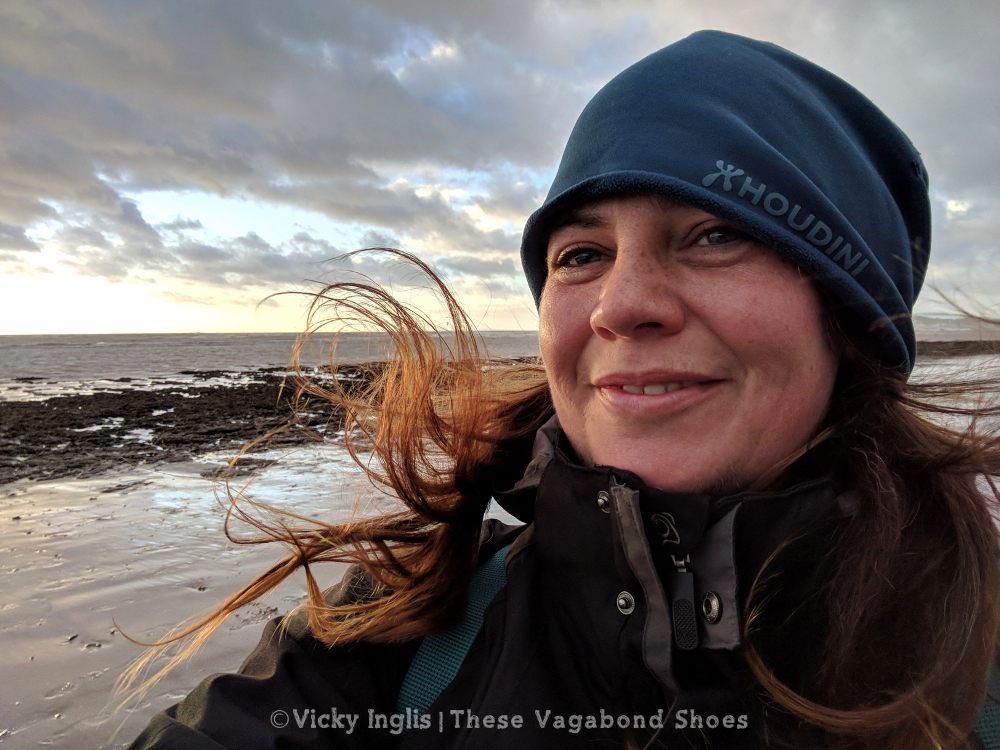 As a wildlife ranger I’d spend the vast majority of my working time outside, all year-round, whatever the weather. As autumn heads into winter, there are a few additional things I rely on to make it easier to get out and do my job, and to make the most of adventures on beautifully crisp winter days.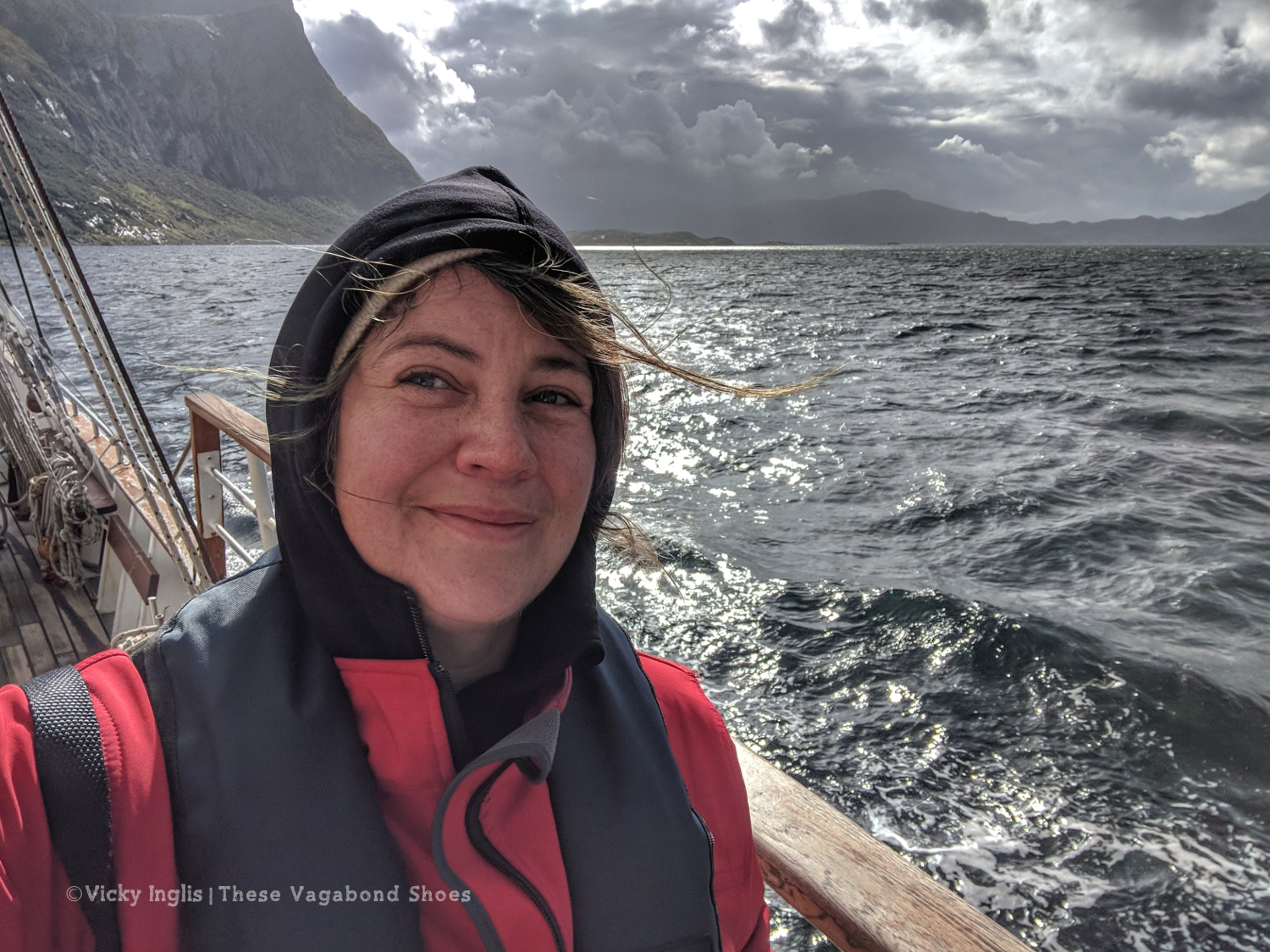

 These Vagabond Shoes.