A series of interesting facts about Antarctica that I uncovered during my research.
Earth’s southernmost continent held us in its thrall long before it was first sighted in January 1820, still just a blank space on the map. The limitless solitude and silence, the vastness of scale, occupying mythical space in our imagination. Even now, with the possibility to visit the continent as a tourist, we are drawn by the idea of blankness, the purity of a landscape without the cultural associations of our own, where we can make our own connections and add new pins to the map.
I’ve done a large amount of research recently to familiarise myself with Antarctica: the short human history and tales of exploration; ecosystems and wildlife; the rock and the ice; the striking natural beauty of the continent. In the process, I’ve uncovered more than a few interesting facts on which to hang my own understanding and experience, and I’m sharing the best of them here.
I’ve compiled a list of my favourite books about Antarctica, including biographies, travelogues, and expedition tales.
I’ve long had a fascination with Antarctica, being captivated by stories of exploration and discovery in Readers Digest books at my grandparent’s house on long Scottish summer afternoons. Primary school trips to see the polar vessel RRS Discovery in Dundee, the three-masted barque that took Scott and Shackleton on their successful first voyage south, and to the penguin enclosure in Edinburgh Zoo, where I met Sir Nils Olav (then just RSM of the Norwegian King’s Guard), further fuelled that interest.
So I’ve been in an absolute whirlwind of excitement since finding out I’ve finally got the opportunity to go for myself; the realisation of a long-burning ambition. I’m part of the team from the United Kingdom Antarctic Heritage Trust that will be based at Port Lockroy, to run the famous Penguin Post Office, for the 19/20 season.
In preparation, I immersed myself in Antarctic-themed reading, and these are some of my favourite books. Until you get the chance for yourself, these books will transport you South. I’ve also rated each book by the amount of penguin content it contains, not as a comment on the quality of the writing. They’re all good books, Brent.
I finished working on Irene in early September, after a beautiful few days sailing around Falmouth, visiting Charlestown, St. Mawes and the Helford River, and headed up to Cambridge for a week of training with theUK Antarctic Heritage Trust. It was an intense week, with a lot of information to take in, but an exhilarating experience as we covered a lot of the practical and theoretical stuff necessary for living and working in Antarctica.
A sunrise start on the Helford River near Falmouth in Cornwall.
The training week was followed up by a lot of online courses and independent research. I’ll write more about the training and preparation I’ve undertaken for my role at the Penguin Post Office in Port Lockroy soon, but I think nothing will actually come close to the experience of arriving and setting foot on the island for the first time.
Windswept and interesting! With Wendy Searle, Lucy Hawthorne, Lauren Own and Jo Symonowski on Pen y Fan.
At the end of September I headed to the Brecon Beacons, to meet a group of fantastic women and do something a bit unusual; hike up Pen y Fan wearing a corset, bloomers and full tweed skirts. You can read more about our Great Corset Caper here, and the good cause that inspired us, My Great Escape here.
Autumn in Glen Tanar on Royal Deeside.
The view towards Mount Keen and the mounth from Glen Tanar.
Autumn leaves about to fall on a frost nipped morning.
Through this summer most of my travels have either been onboard Irene, or around the areas where the ship has been based. After completing the TGO Challenge, and taking part in an interview for a winter job, I returned to Oban to rejoin the ship. After a quick turn around, we picked up Kag, our kayaking guide, and a bunch of boats, and headed out to explore the islands of the Inner Hebrides.
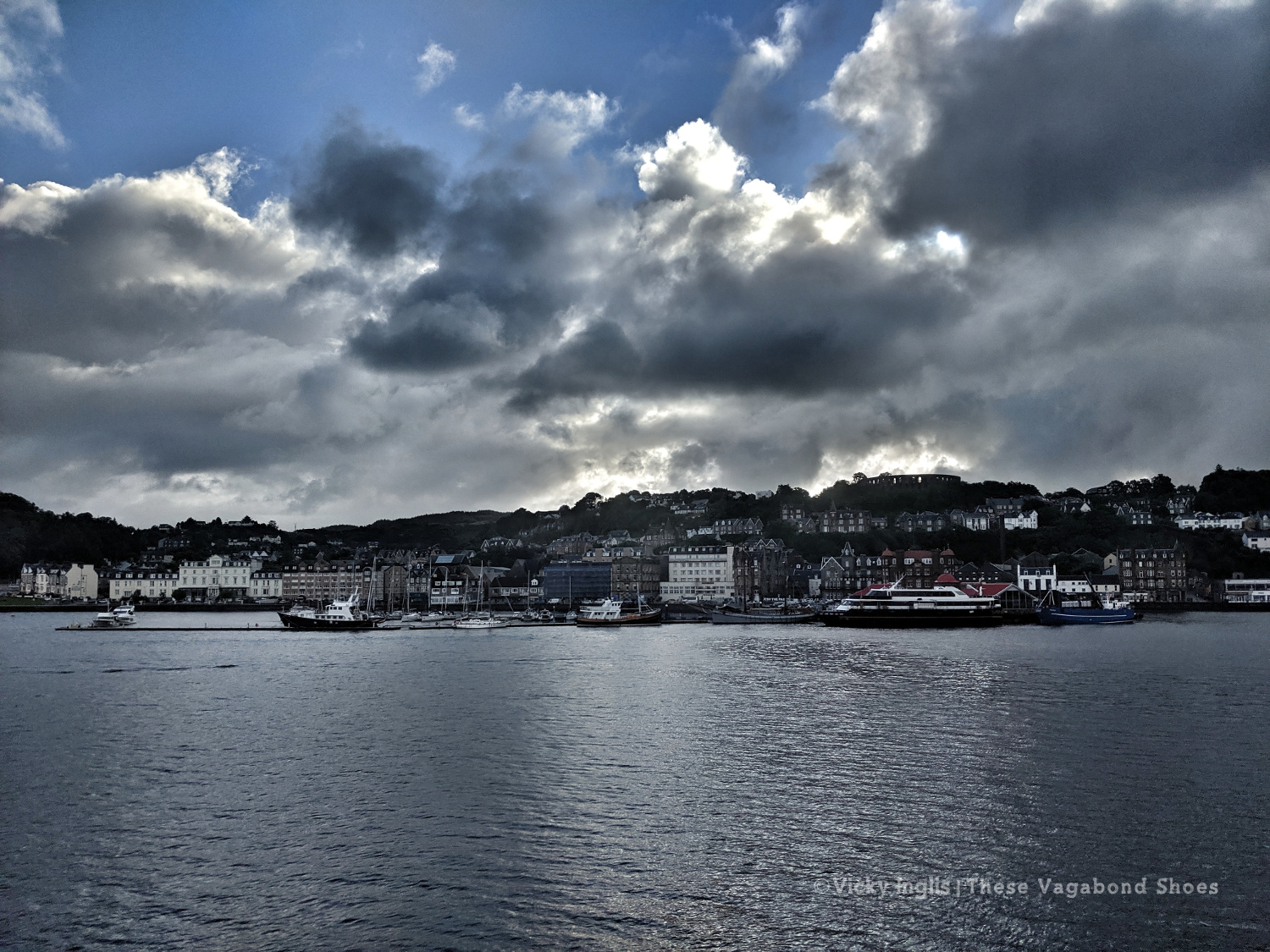
Looking back at Oban from the middle of the Sound of Kerrera
Our first stop was the sheltered water of Loch Spelve, on the eastern side of Mull, to wait out high winds and feast on mussels from the local farm and foraged seaweed. As I was pottering about in the tender I had a phone call. I was successful at the interview. I got the job! Or more accurately, I was going to be part of the team to do the job. More about that below.
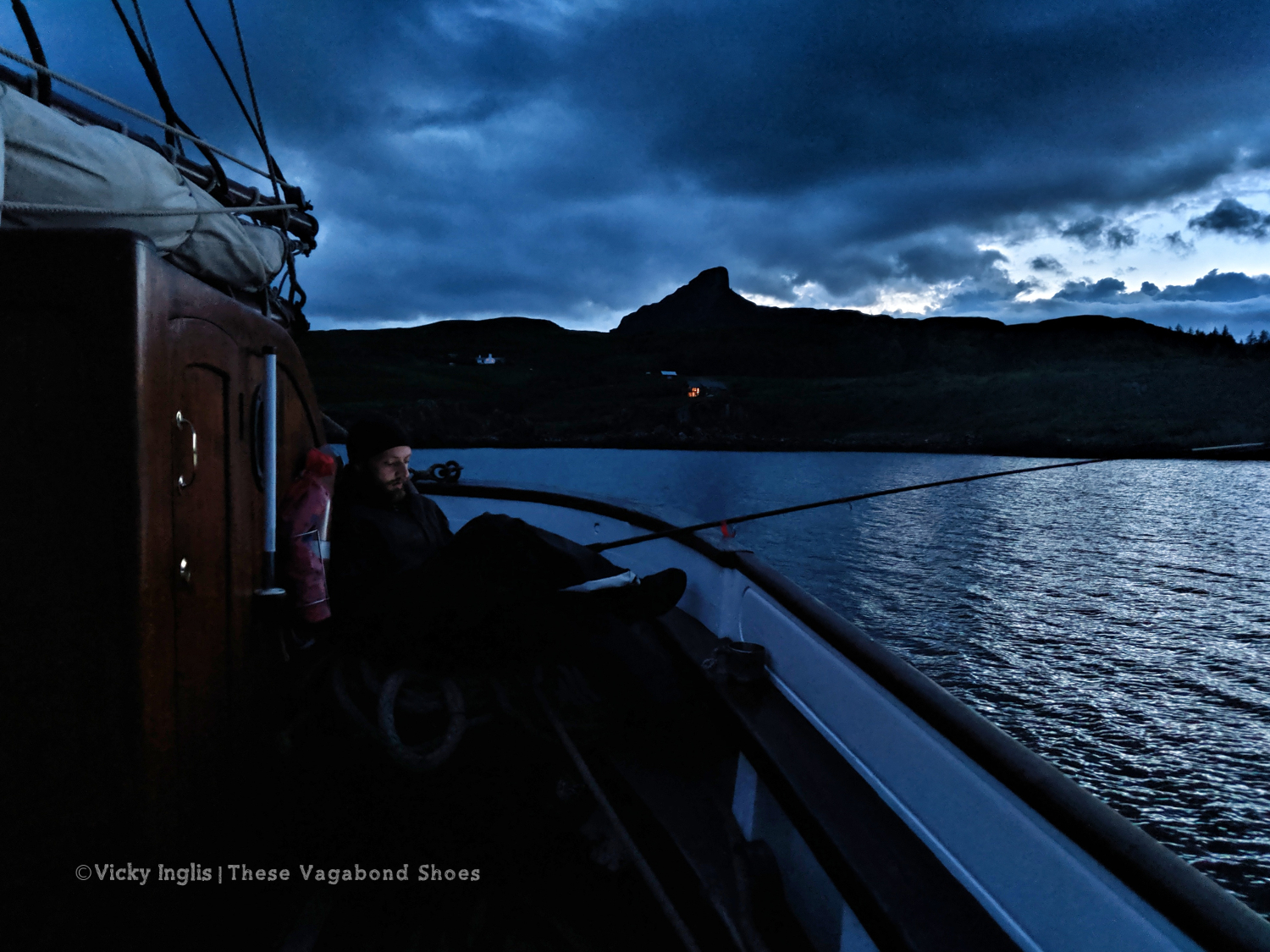
Deckhand Dan, possibly the least successful fisherman on Irene.
Once storms abated, we headed through the Sound of Mull and round Ardnamurchan Point to the Small Isles, spotting a couple of minke whales on the way. We dropped anchor off Eigg, under the imposing An Sgurr, for a couple of nights, and I was fortunate to join the group for a paddle along the east side of the island accompanied by singing seals and diving gannets. Kag also introduced us to the concept of sea diamonds, which made kayaking in a total downpour seem damply magical.
Back in Oban, we had time for a quick crew turn around and a couple of great nights out, before heading out. This time we turned southwards, heading for Jura, and the sheltered water of Loch Tarbert, and Islay, dropping the kayakers in near Ardbeg for a paddle round to Port Ellen, with as many whisky stops as they could manage. On the return leg, we called in by the islands of Oronsay and Colonsay, anchoring in beautiful Kiloran Bay for a barbecue on the beach.
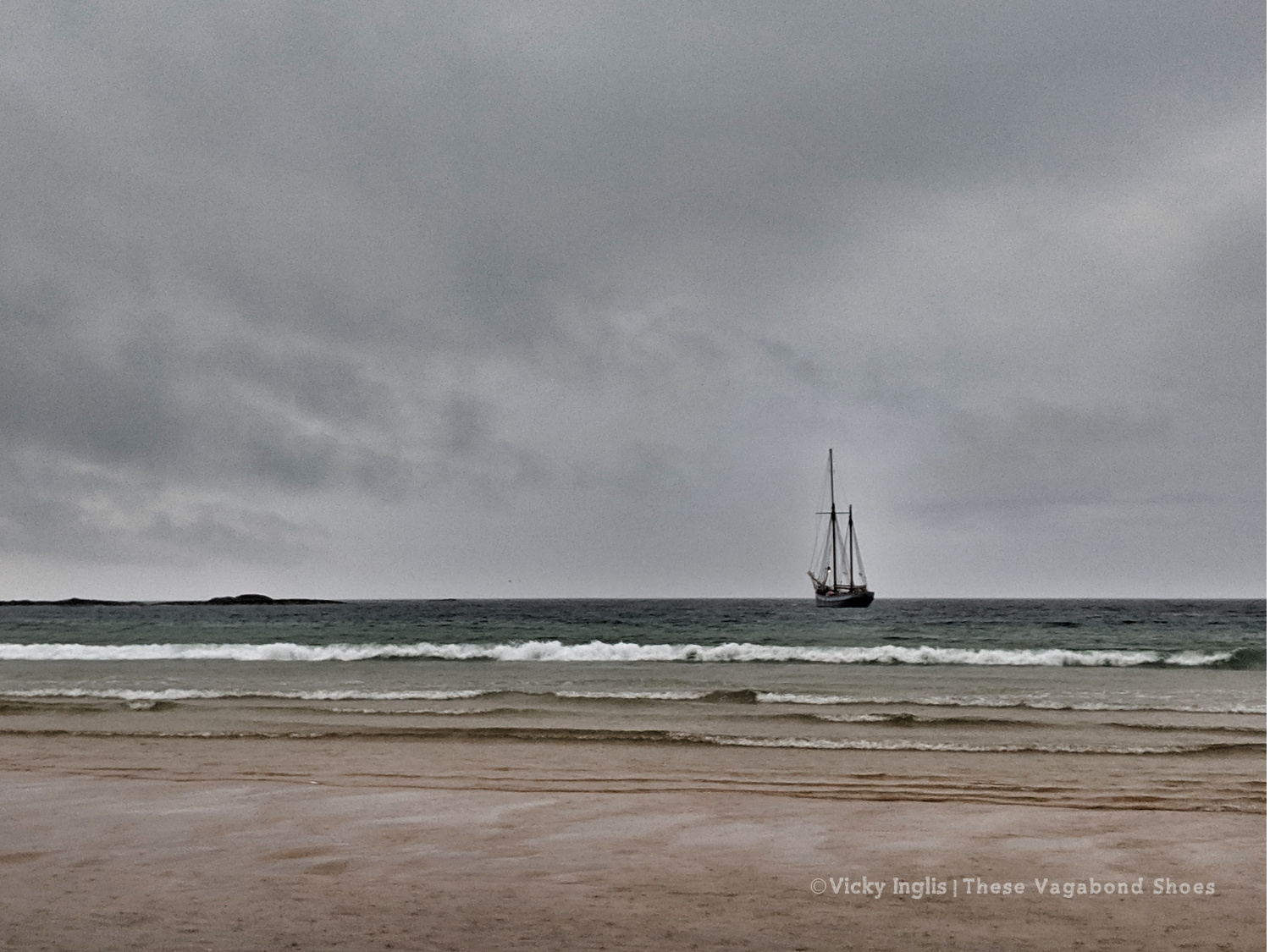
Irene at anchor in Kiloran Bay, Colonsay. An extremely damp beach recce, but the weather dried up overnight for a beautiful stay.
For many visitors, the historic university city of Cambridge is almost the definition of Englishness and academia (well, unless you have any kind of connection to “the Other Place*”). Imagine lounging around on college lawns; punting, poetry, and jugs of Pimms; cycling down cobbled streets in a cap and gown; late-night discussions on existentialist philosophy…If only it was possible to become intellectual by osmosis.
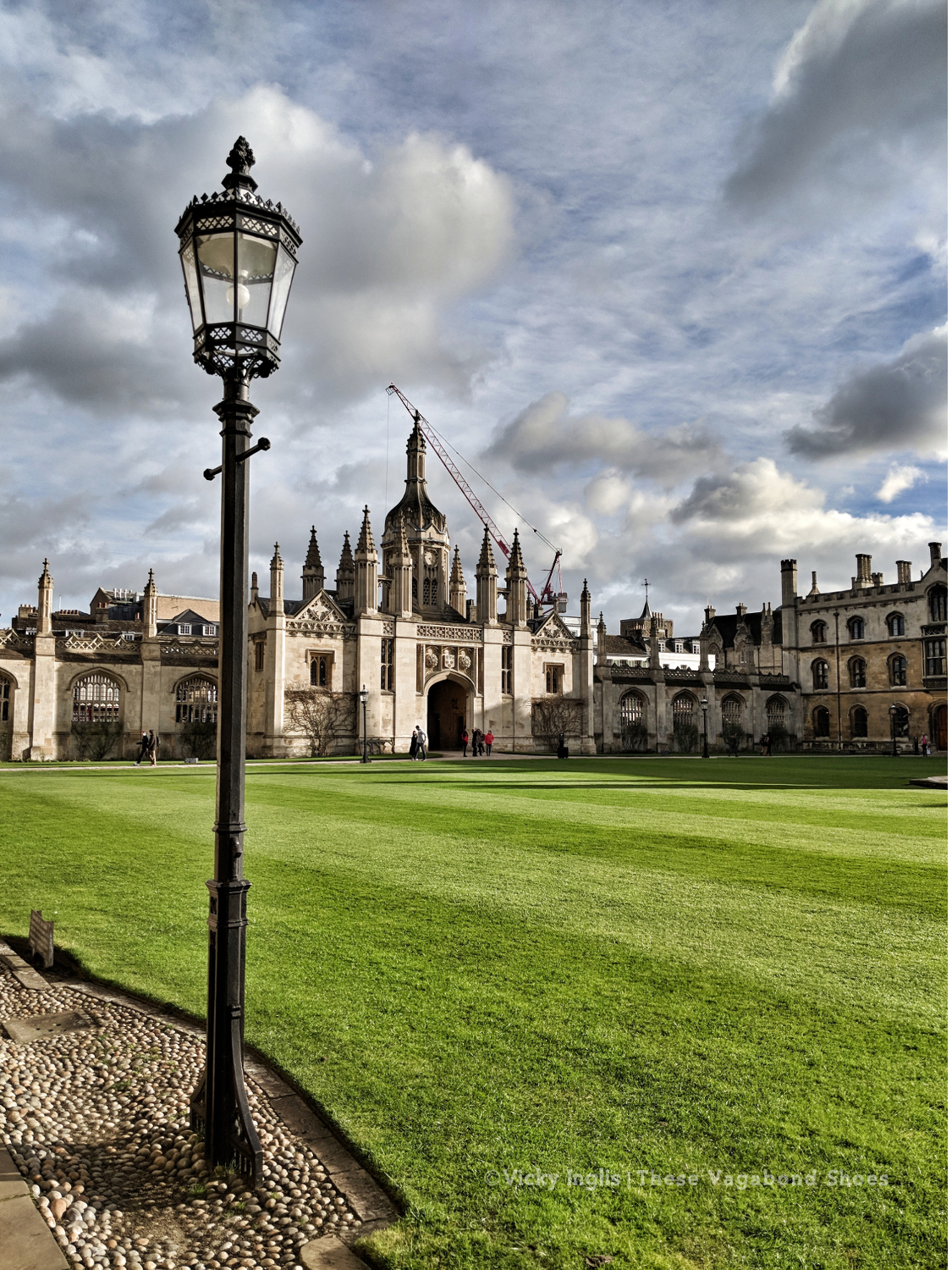
King’s College Gatehouse, the boundary between town and gown.
The city, through the colleges and museums, inspired many residents to strike out for new horizons in search of adventure and new discoveries. Cambridge also received specimens, artefacts, treasures from around the globe, and journals filled with ideas that continue to inform and inspire visitors to look further afield, and make plans for their own expeditions.
So to help you get your bearings and set off on a successful expedition, this is my vagabond guide to spending time in Cambridge like a true old-school explorer.



 These Vagabond Shoes.