

The Falkland Islands are far from the usual tourist routes, and few people from outwith the islands know very much about them. But one of the things the Falklands is widely known for around the world is the archipelago’s reputation as the Land Rover capital of the planet, and a place where these vehicles hold a near cult status.
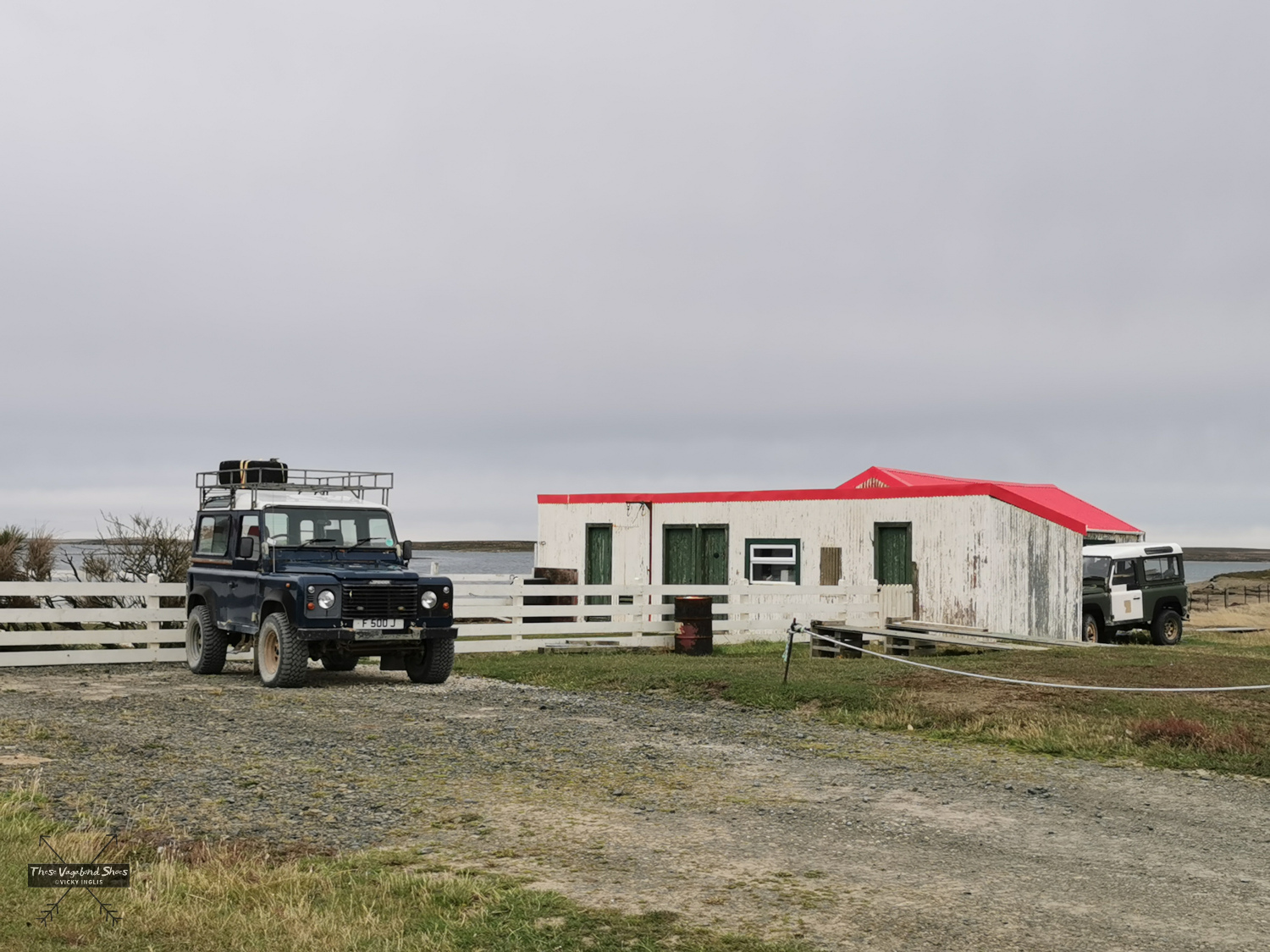


Driving in the Falkland Islands is an experience not for the faint-hearted. Many of the roads outside Stanley are gravel, and often single-track at that, save for a short paved section on the route to Mount Pleasant airport, and in some parts of Camp the road is barely distinguishable from grazing parks, cattle runs, or even bog.


There were few roads outside Stanley before the conflict in 1982. The only options to travel between farms and settlements in Camp was on horseback, or by the ubiquitous farm Land Rovers in convoy, negotiating vast expanses of bog and rough terrain on dirt tracks. An extensive post-war road-building programme saw good all-weather dirt and gravel roads built to almost every settlement on East Falkland, but it wasn’t until the late 1990s that the network extended to West Falkland.


The Falkland Islands have the highest rate of 4WD vehicle ownership anywhere in the world, and the numbers of Land Rovers alone outnumber the permanent residents of the islands. As a consequence, Falklanders are some of the best off-road drivers anywhere in the world.


The original Land Rover (Series I) was developed in 1948 as a rugged, go-anywhere utility vehicle. The simple, easy-to-maintain and repair systems of the Land Rover suited it for life in rural locations, in places where a make-do and mend mindset was second nature, and the first vehicles were brought to the Falklands soon after it entered production.


Once the Series II Land Rover became available in 1958, it became the universal farm vehicle across the islands. Specialist modifications were introduced for the police, fire service, and ambulances, and the local Government, and the British military brought Series III Land Rovers to the islands, which were sold on to local residents as their upgrades were brought in.


And given the make-do-and-mend necessity of life in a rural location, and the easily interchangeable parts of Land Rovers, many classic and vintage vehicles are still in daily use across the archipelago.


An array of models can be seen, from the Series I, II, IIa, and III, Land Rover 90, 110, to the Defender 90, 110 and 130, and 101 Forward Control. There’s even a modified long-wheelbase Defender hearse available for funerals, and somewhere in the islands, a caterpillar-tracked Forest Rover (despite the widespread lack of trees).


You can find much more on the Land Rovers of the Falkland Islands Facebook page.


Have you been to the Falkland Islands? Are you a Land Rover fan? What about these charismatic vehicles that appeal? Let me know your thoughts in the comments below.

If you’ve really enjoyed my Photo Journals, you can buy me a virtual coffee here.
Did this post capture your imagination? Why not pin it for later?


 These Vagabond Shoes.
One thought on “Photo Journal | Land Rovers of the Falkland Islands”